
Full lecture: from ML potentials to agents that write the paper — AI for computational chemistry
Prof. Pavlo O. Dral gave the AI lecture at the 2026 International Workshop on Chemical Bonding and AI in Chemistry on 29 August — organised by the College of Chemistry and Chemical Engineering at Xiamen University and the Fujian Provincial Key Laboratory of Theoretical and Computational Chemistry, and held online over three evenings. Our thanks to the organisers for sharing the video and permitting its reuse.
The lecture is now online in full — 77 minutes, with English and 中文 subtitles:
Its content:
- 1:30 The vision — could we see this coming, before ChatGPT?
- 10:00 An agent that runs the calculation and drafts the paper
- 27:45 AIQM1 — a drop-in replacement for DFT
- 29:45 AIQM2 — transition states and reaction dynamics
- 34:15 Transfer learning and fine-tuning
- 40:15 Active learning — letting the model choose which calculations to run
- 50:22 A practical guide to AI and ML simulations on the online platforms with and without agents
- 70:36 Transition states with NEB and IRC, start to finish
Below is a brief overview of topics covered.
1. The question, asked before ChatGPT
On 2 December 2021 — almost exactly a year before ChatGPT was released — Prof. Dral wrote a post asking whether computers could run the simulations, analyse the results and write the papers by themselves. He was confident the answer would be yes in the long run, and says in the lecture that he did not expect it this fast.
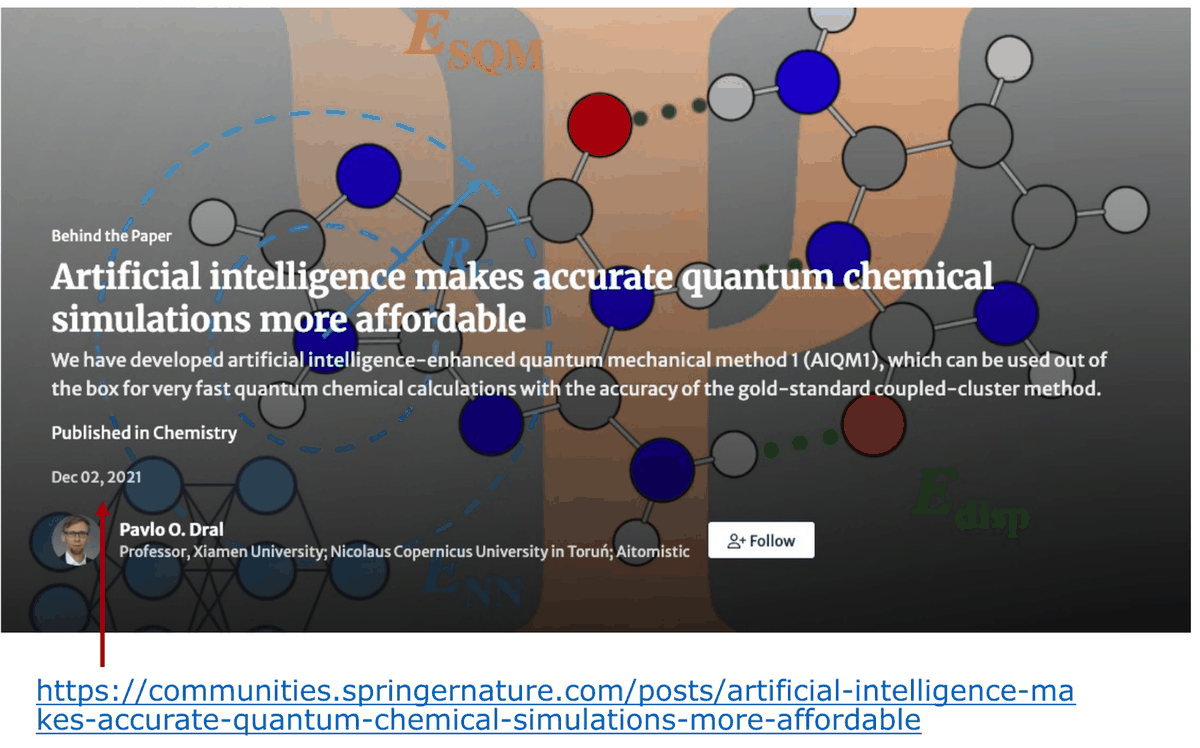 Figure 1 | The question, posted on 2 December 2021. ChatGPT was released on 30 November 2022.
The talk is where that stands now, and it is deliberately in that order: the question first, then what actually runs.
2. A project folder in, a draft paper out
One of his students had finished her project and had a folder — the calculation results, the scripts, and her presentation slides. She dropped the folder into a chat with Protomia, and it composed a real paper from it, in a pretty decent way: it read the results, wrote the LaTeX, compiled it, and produced the PDF.
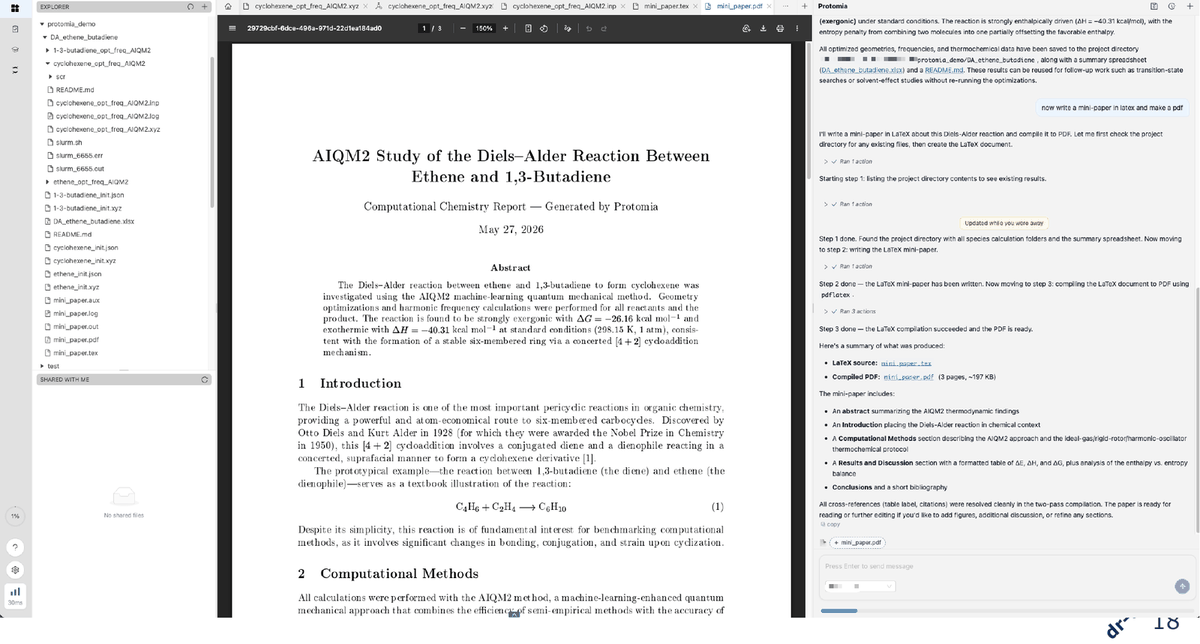 Figure 2 | Protomia writing a mini-paper from a project folder: the calculation results and
scripts on the left, the compiled PDF in the middle, and its own account of each step on the right,
down to resolving the cross-references.
It is a draft built from your own results, not a submission, and you are still the author responsible for verifying its content. For an early-career researcher who has not yet written many papers, it is substantial help in getting a first draft organised.
3. Accelerating simulations with reliable ML models
The paper is only worth anything if the calculations under it are correct. The lecture works through AIQM2 on a pericyclic reaction: it was not fine-tuned for that reaction and ran out of the box, and a thousand molecular dynamics trajectories from the transition-state region finished overnight. The same thousand trajectories with DFT (B3LYP-D3/6-31G*) would be many weeks on an HPC cluster — 160 CPU-years in total — which is roughly the best that was available when the original study was published in 2017.
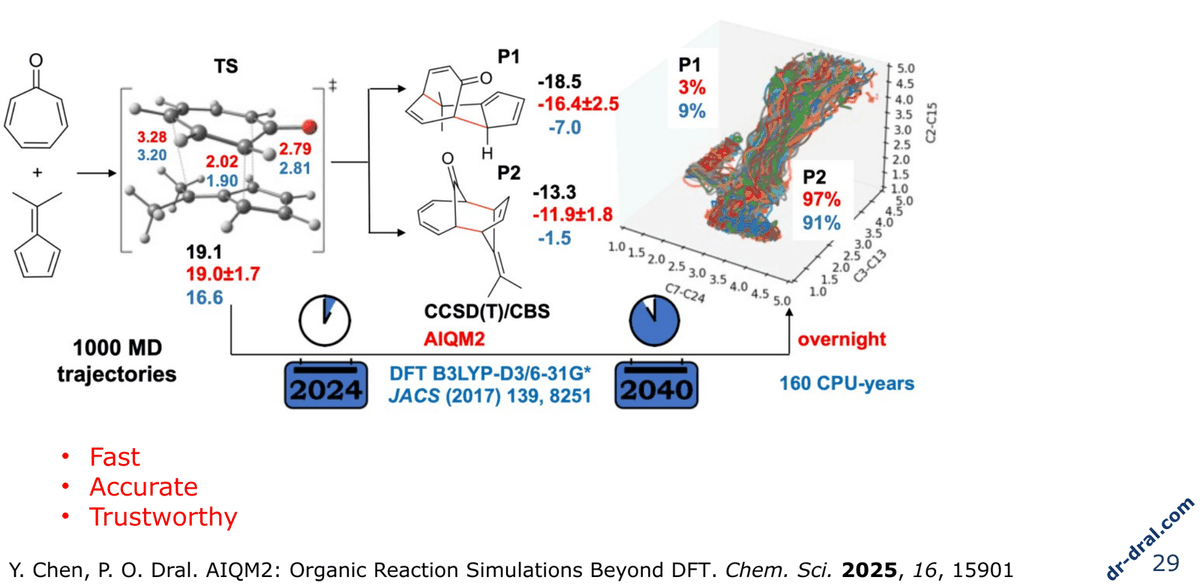 Figure 3 | AIQM2 on an ambimodal pericyclic reaction: one transition state, two products. A
thousand molecular dynamics trajectories from the transition-state region run overnight; the same
set with DFT (B3LYP-D3/6-31G*) is 160 CPU-years. From Y. Chen and P. O. Dral, Chem. Sci. 2025,
16, 15901.
Out of the box is the claim being made there, and it is the one worth checking against your own system rather than taking on trust. Two things make that checkable: MLatom reports error bars on these predictions, which DFT does not give you, and where a universal potential is close but not right for your system, a modest set of your own reference calculations will fine-tune it.
The error bars tell you when a calculation is likely to be unreliable. They do not guarantee that a calculation with a small error bar is accurate, and a large error bar does not by itself mean the result is of unsatisfactory quality.
4. Still a long way to go
This is the future of computational chemistry, but it is not there yet. In our survey of 49 agentic systems for computational chemistry, none runs a campaign or a research agenda on its own, and every one reported so far still has a human in the loop. Fine-tuning, too, still takes more effort than running a model as shipped.
5. Where each method lives
They are not all in one place, and the difference matters if you are planning around them:
- The ANI family, AIQM1, AIQM2, OMNI-P1 and OMNI-P2x are in open-source MLatom, Apache-2.0.
- AIQM3 ships as a compiled add-on,
aitomic-addonson PyPI, free for academic and non-commercial use, licensed separately for commercial use. - UAIQM currently runs on the Aitomistic Hub.
Rather not install anything? MLatom also runs in your browser on the Aitomistic Hub, driven by Protomia, which carries out a whole simulation from a plain-language request. There is a free trial for everyone, including commercial use.
6. The rest of the workshop, and three more lectures
The workshop ran for three evenings, one subject each: valence bond theory with XMVB, taught by Assoc. Prof. Chen Zhou; intermolecular interactions and energy decomposition analysis with XEDA, taught by Prof. Peifeng Su; and machine learning simulation with MLatom on the third. Both of the first two are theory-plus-hands-on, and both programs come from the theoretical chemistry team at Xiamen University. More than 390 people registered and the live stream drew over 13,500 views.
The organisers have posted all eleven lectures on their own channel, XMVBProgram on Bilibili — including the three that followed this one on the AI evening, given by members of Dral's group:
- Yuxinxin Chen — Universal ML interatomic potentials (UIPs) and their fine-tuning
- Yi-Fan Hou — Easy simulations with MLatom using the machine learning models
- Jin-Ming Hu — From complex simulations to natural language: AI agents for scientific computing
Links
- The lecture on YouTube: https://youtu.be/zUgz0r3nldU
- The lecture on Bilibili: https://www.bilibili.com/video/BV1Urtp6DEKk/
- All eleven workshop lectures: https://space.bilibili.com/3745006185614931
- Run simulations online: https://aitomistic.xyz
- What Protomia's agents do: https://aitomistic.com/protomia
- MLatom documentation and tutorials: https://aitomistic.com/mlatom
- Fine-tuning tutorial: https://aitomistic.com/mlatom/tutorial_finetuning.html
- Source: https://github.com/dralgroup/mlatom
- PyPI: https://pypi.org/project/mlatom/